Menu
Foundation Repair in Cedar Park, TX: Clay Soil, Repair Methods & Real Costs
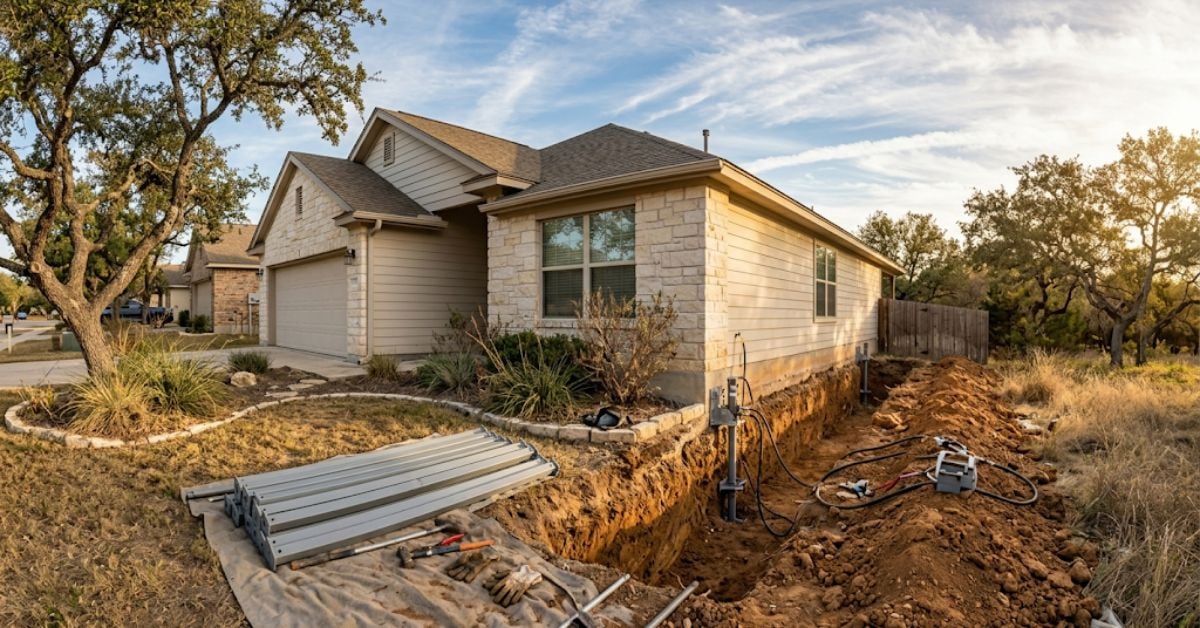
Cedar Park sits at one of the trickier spots in Central Texas for residential foundations. The city straddles the transition between the Blackland Prairie clay belt to the east and the limestone-based Edwards Plateau to the west , which means two homes just a few miles apart can face completely different foundation problems. Add in the region’s aggressive shrink-swell cycles, tree-root competition around mature neighborhoods, and the fact that many Cedar Park homes were built during the rapid growth boom of the 2000s on cut-and-fill lots, and you get the picture: foundation repair is one of the most-asked-about home services in this market for a reason.
This guide walks through what’s actually happening beneath Cedar Park homes, the repair methods that work in local conditions, real 2026 cost ranges, warning signs worth acting on early, and how to vet a contractor without falling for pitches that show up in every market with active soil movement.
For deeper background on why Central Texas soil behaves the way it does, see our companion post on Central Texas clay soil and foundation damage. For the general warning signs and cost baseline, our posts on foundation trouble warning signs and foundation repair cost in Austin cover the metro-wide picture.
Why Cedar Park Homes Are Especially Vulnerable
The East-West Soil Divide
Cedar Park is not a single soil zone. Eastern neighborhoods , closer to US-183 and the older Anderson Mill / Buttercup Creek areas , sit on deep expansive clay from the Blackland Prairie system. Western neighborhoods , Twin Creeks, Ranch at Brushy Creek, and areas approaching the Balcones Escarpment , sit on shallower soils over limestone bedrock. The eastern homes deal with classic swelling-and-shrinking clay foundation movement. The western homes often deal with a different problem entirely: differential support where thin soil sits over uneven rock.
The Cut-and-Fill Legacy
Much of Cedar Park was developed rapidly between 1998 and 2015. To make hilly terrain buildable on tight schedules, many lots were graded with substantial cut-and-fill work , soil moved from the high side of the lot to build up the low side, creating a level pad for the slab. Fill soil compacts and settles differently than native soil for decades afterward. Homes on the “fill” side of a cut-and-fill lot often experience settlement that homes on the “cut” side don’t.
Mature Tree Root Competition
Many Cedar Park neighborhoods have mature live oaks, cedar elms, and pecans planted 20 or more years ago. Root systems from these trees pull massive amounts of moisture from the soil in dry periods , creating localized clay shrinkage that can pull down the corner of a foundation nearest the tree. Homes in older sections of Brushy Creek, Cypress Creek, and Anderson Mill West often show this pattern.
The Central Texas Drought-Flood Cycle
Central Texas has moved through repeated multi-year drought periods followed by intense wet stretches. Each cycle stresses foundations , the clay shrinks in drought, then swells when the rain returns. Homes that survived a decade of moderate weather often start showing problems after a severe drought/flood swing.
Warning Signs That a Cedar Park Home Has Foundation Movement
Interior Signs
- Diagonal cracks radiating from the corners of doors and windows
- Doors that stick or fail to close cleanly in seasons they used to work in
- Windows that resist opening in summer or bind in winter
- Gaps opening between crown molding and ceiling, or between baseboards and floor
- Cracks in ceilings that run in a straight line across a room
- Sloping floors detectable when a marble or ball rolls on its own
- Cracks in tile floors or grout lines widening over time
- Cabinets pulling away from the wall
Exterior Signs
- Stair-step cracks in brick veneer, especially near corners
- Vertical cracks in stucco walls
- Gaps between the chimney and the main structure
- Separation between the garage door frame and the surrounding wall
- Cracks in the visible portion of the slab or grade beam
- Water pooling next to the foundation rather than draining away
- Cracked or displaced concrete walkways, driveways, or patios next to the house
Cracks That Are Almost Always Serious
Horizontal cracks in interior walls, cracks wider than a nickel’s edge (about 1/16 inch), cracks that continue to widen over weeks, cracks accompanied by door/window binding, and any crack that appears suddenly after a specific weather event. Any combination of these warrants professional assessment quickly rather than “watch and see.”
Foundation Repair Methods Used in Cedar Park
Steel Push Piers
Hydraulically driven steel piers pushed to bedrock or to a depth where the soil can support the load. The most common repair method for Cedar Park slab foundations with clay-soil movement. Steel piers reach depths of 20 to 40+ feet depending on where competent bearing material sits.
- Best for: Slab-on-grade homes with clear settlement patterns, particularly along one wall or corner.
- Typical cost per pier: $1,400-$2,200 installed in the Cedar Park market.
- Typical project scope: 6-14 piers for moderate settlement; more for whole-house lifts.
Concrete Pressed Pilings
Cylindrical concrete cylinders pressed into the soil in a stack until they reach bearing capacity. Historically the most common Central Texas method; still widely used, especially by high-volume repair companies.
- Best for: Straightforward slab settlement where steel piers aren’t required.
- Typical cost per piling: $500-$900 installed in Cedar Park.
- Consideration: Doesn’t always reach bedrock , depth limited by pressing force. Can shift over time if the underlying soil layer continues to compress.
Drilled Bell-Bottom Piers
Deeper concrete piers with a bell-shaped base, drilled to a specified depth (often to bedrock in western Cedar Park). Higher cost per pier but more stable long-term than pressed pilings.
- Best for: Areas where reaching bedrock is critical, or where soil conditions won’t support pressed pilings reliably.
- Typical cost per pier: $2,000-$3,500 installed.
- Consideration: Requires drilling access and creates more excavation disruption during installation.
Mudjacking / Slabjacking
Pumping a cement slurry or polyurethane foam beneath a settled slab to lift it back to level. Not a whole-house foundation repair , used for specific slab sections like garage floors, driveways, patios, or interior slab sections where a full pier system isn’t needed.
- Best for: Localized slab settlement (garage floor, walkway, patio) rather than main structure.
- Typical cost: $500-$1,800 depending on area and lift required.
Pier & Beam Adjustments
For the smaller number of Cedar Park homes on pier and beam foundations (mostly older properties), repair typically involves adjusting or replacing failing shims, replacing damaged beams or piers, and correcting drainage issues underneath the crawl space. Costs vary widely based on scope but often run less per home than full slab pier systems.
Real 2026 Foundation Repair Costs in Cedar Park
| Project Scope | Method | Typical Cost Range |
|---|---|---|
| Minor settlement (1 corner) | 4-6 concrete pilings | $2,500 – $5,500 |
| Moderate settlement (one wall) | 6-10 steel push piers | $9,000 – $22,000 |
| Significant whole-side lift | 10-15 steel push piers | $15,000 – $33,000 |
| Major whole-house project | 16-25+ piers | $22,000 – $55,000+ |
| Localized garage/patio slab lift | Mudjacking / foam injection | $500 – $1,800 |
| Pier & beam shim adjustment | Level and re-shim | $3,500 – $10,000 |
| Pier & beam beam/pier replacement | Structural repair | $8,000 – $25,000+ |
Cost Factors That Push the Number Higher
- Access constraints: Tight side yards, difficult access to interior piers, or landscaping that must be preserved add labor time and cost.
- Interior pier installation: Piers installed inside the home (through the slab) cost more than exterior piers due to floor cutting, patching, and interior protection.
- Depth to competent bearing: Piers that must reach 30-40+ feet cost more than shallower installations.
- Drainage correction: Fixing underlying drainage issues that caused the movement often adds $2,000-$8,000 to project scope.
- Cosmetic repair: Patching interior drywall cracks, re-caulking, touching up trim, and fixing tile after the foundation is stabilized adds $1,500-$6,000 to typical projects.
- Permit requirements: Cedar Park requires permits for structural foundation repair; permit and engineering fees typically add $500-$1,500.
How to Vet a Foundation Repair Contractor in Cedar Park
Independent Engineering Assessment First
Before signing with any repair contractor, get an independent structural engineer’s assessment. A licensed Texas Professional Engineer (P.E.) provides an objective report on what’s actually happening with your foundation, what needs to be done, and how many piers or what method is genuinely required. Cost: $500-$1,200 for a typical residential assessment. This single step protects you from being oversold on unnecessary piers or the wrong method.
Multiple Detailed Quotes
Get at least three quotes from established Cedar Park-area contractors. Compare not just total price but pier count, depths, method, warranty terms, and included scope (drainage work, cosmetic repair, engineering, permits).
Warranty Terms Matter
Look for lifetime transferable warranty on the repair work , meaning if the piers fail or the foundation moves again in the same area, the contractor addresses it at no additional cost, and the warranty transfers to future owners if you sell. Shorter warranties or non-transferable warranties are red flags in this market.
Red Flags to Avoid
- High-pressure sales tactics (“sign today for a discount”)
- Refusal to provide references or completed project addresses in Cedar Park
- Quotes given without on-site inspection
- Cash-only or heavy up-front payment demands
- Vague scope descriptions (“stabilize the foundation”) rather than specific pier count, depth, and locations
- Claims that all repair companies use the same methods (they don’t)
- Recommending immediate whole-house repair before an engineer has assessed the problem
Verify Insurance and Licensing
Confirm general liability insurance and workers’ compensation coverage. Foundation work involves excavation, structural adjustment, and heavy equipment on your property , a contractor without proper insurance leaves you exposed to significant liability if something goes wrong.
Preventing Future Foundation Movement
Repairs address existing damage; prevention keeps it from repeating. In Cedar Park, the highest-value prevention steps are:
- Consistent foundation moisture: Maintain steady soil moisture around the foundation to minimize shrink-swell cycling. See our post on how often to water your foundation in Central Texas for the practical routine.
- Proper grading: Ensure soil slopes away from the foundation at 6+ inches per 10 feet of horizontal distance for the first 10 feet from the house.
- Functional gutters and downspouts: Downspouts should discharge water at least 5 feet from the foundation, not right at the base.
- Tree root management: Mature trees within 20 feet of the foundation should be evaluated for root barriers, especially in eastern Cedar Park neighborhoods with clay soil.
- Drainage correction: French drains, surface drains, or grade correction to address water pooling near the foundation.
- Prompt gutter cleaning: Blocked gutters overflow directly at the foundation , the fastest way to create localized soaked-soil movement.
Is Foundation Repair Worth It Financially?
The short answer for most Cedar Park homes: yes, if the movement is confirmed and worsening. Unaddressed foundation movement continues to progress, and the associated damage , brick veneer cracking, interior finish damage, plumbing line stress, roof-plane distortion , cascades. A $15,000 repair today often prevents $40,000+ in accumulated damage over the next decade.
Foundation repair also has resale implications. Cedar Park buyers routinely walk away from homes with visible unaddressed foundation issues. A completed repair with transferable warranty and engineering documentation is typically neutral to slightly positive at resale , much better than the alternative of ongoing visible damage. See our detailed post on whether foundation repair is worth it for the full financial framework.
Serving Cedar Park & the Surrounding Metro
We handle foundation projects across Cedar Park and the surrounding Williamson County and Travis County suburbs, with attention to the local soil variations that make repair specifications different from other Austin metro areas. Neighborhoods we regularly serve include Brushy Creek, Buttercup Creek, Twin Creeks, Anderson Mill West, Cypress Creek, Ranch at Brushy Creek, and newer sections of northern Cedar Park.
Why Tex Land Construction
Tex Land Construction is a BBB Accredited, 5.0-star rated, GuildQuality-member exterior contractor with foundation repair as part of our full-service exterior scope. We coordinate with independent licensed structural engineers on assessments, quote projects with itemized pier counts, depths, and warranty terms, and stand behind our repair work with transferable warranty coverage. We do not use high-pressure sales tactics and will honestly tell homeowners when their observed cracks don’t warrant immediate repair.
You can review our published business information on our Hotfrog Austin home improvement listing, our Storeboard business page, and our Issuu portfolio. We offer a 5% discount on all services for military veterans, active duty service members, first responders, and senior homeowners.
Call 512-808-6882 or visit our contact page to schedule a free foundation inspection.
Frequently Asked Questions
How much does foundation repair cost in Cedar Park, TX?
Real 2026 Cedar Park foundation repair costs range from $2,500-$5,500 for minor corner settlement (4-6 concrete pilings), $9,000-$22,000 for moderate one-wall settlement using 6-10 steel push piers, and $22,000-$55,000+ for major whole-house projects requiring 16+ piers. Localized garage or patio slab lifts using mudjacking or foam injection typically run $500-$1,800. Actual project cost depends on pier count, depth required, method, access constraints, and included scope for drainage correction and cosmetic repair.
What causes foundation problems in Cedar Park homes?
Four main causes: expansive clay soil that shrinks and swells with moisture cycles (especially in eastern Cedar Park neighborhoods), cut-and-fill lot construction from the rapid 1998-2015 growth period where fill soil settles differently than native soil, mature tree root systems pulling moisture from foundation-adjacent soil, and Central Texas’s repeated drought-flood cycles that stress foundations over years. Western Cedar Park neighborhoods closer to the Balcones Escarpment sometimes experience a different pattern , differential support where thin soil sits over uneven limestone bedrock.
What are the best foundation repair methods for Cedar Park soil?
Steel push piers are the most common effective method for Cedar Park slab foundations with clay-soil movement. Concrete pressed pilings work for straightforward slab settlement at lower per-pier cost. Drilled bell-bottom piers deliver the most stability for critical structural situations, especially in western Cedar Park where reaching bedrock matters. The right method depends on your specific soil conditions, foundation type, and settlement pattern , a licensed structural engineer’s assessment before signing with any repair company protects you from being sold the wrong method.
How long does foundation repair take in Cedar Park?
Typical residential foundation repair projects in Cedar Park take 2-5 days of on-site work for moderate scope (6-10 piers). Major whole-house projects can take 5-10 days. Add 4-8 weeks for engineering assessment, permit processing through the City of Cedar Park, and contractor scheduling before the on-site work begins. Post-repair cosmetic patching of interior drywall, trim, and tile typically takes an additional 3-7 days.
Does homeowners insurance cover foundation repair in Texas?
Generally no. Standard Texas homeowners policies exclude damage from soil movement, settling, expansion, and contraction , the primary causes of Central Texas foundation problems. Some policies cover foundation damage caused by specific covered events (plumbing leaks under the slab, for example), but the day-to-day clay soil movement that affects Cedar Park homes is almost always the homeowner’s responsibility. Read your specific policy language and consult your carrier.
Should I get an engineer’s report before hiring a foundation repair contractor?
Yes, strongly recommended. An independent licensed Texas Professional Engineer’s assessment ($500-$1,200 for typical residential) provides an objective evaluation of what’s actually happening with your foundation, what repair method is genuinely required, and how many piers are needed. This protects you from being oversold on unnecessary work by high-volume repair companies whose sales staff are incentivized to specify more piers than needed. Some Cedar Park homeowners have avoided $10,000+ in unnecessary scope by getting an engineer’s opinion first.
Free Foundation Inspection in Cedar Park
Honest assessment of what your home actually needs. BBB Accredited. Transferable warranty on repair work. 5.0 Google rating.
Schedule Free Inspection →Let’s talk about your home.
Schedule a free consultation →