
Menu
Foundation Trouble or Just a Crack? Warning Signs in Central Texas Homes
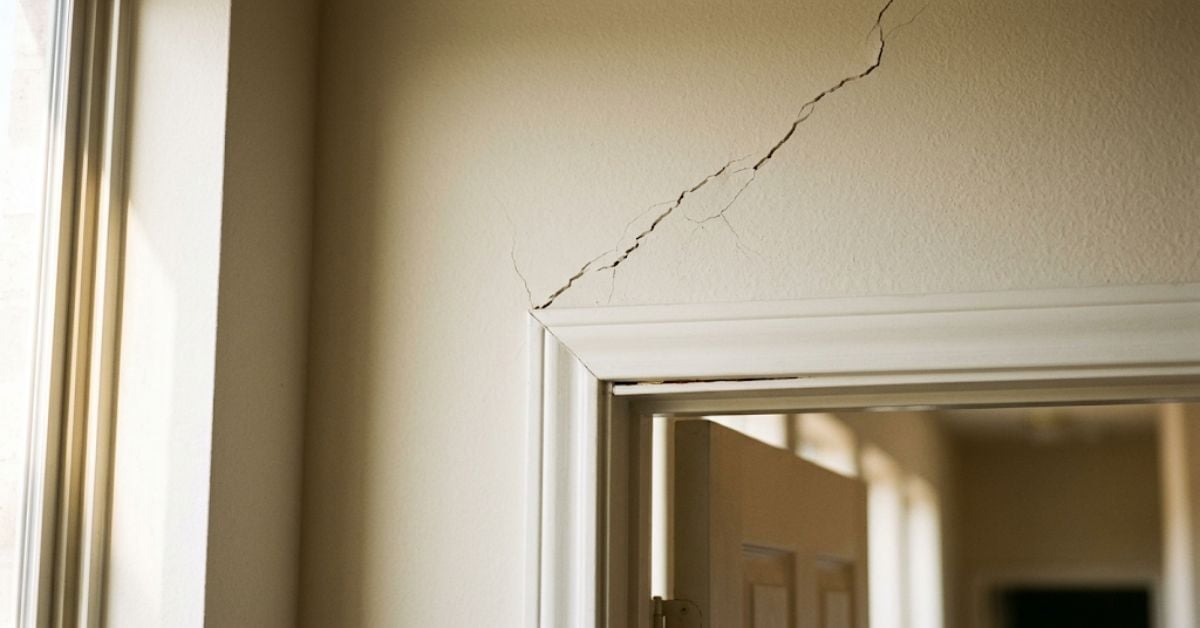
Every home settles. A crack in the drywall, a door that sticks in July, a small gap where the baseboard meets the tile, none of that is unusual in Central Texas. But there’s a line between normal settling and a foundation that’s actively moving. And in this part of the state, that line is closer than most homeowners realize.
Central Texas sits on some of the most challenging soil in the country for residential foundations. The clay expands when wet, shrinks dramatically when dry, and rarely spends much time in the middle. Combine that with our drought-flood cycle, a shallow topsoil layer over limestone bedrock, and long summer heat that pulls moisture out of the ground for months at a time, and you have the conditions for real foundation movement on a real timeline.
This guide walks through the warning signs that actually matter, how to tell the difference between cosmetic and structural cracks, and when it’s time to call a professional. The goal is not to scare you into unnecessary repairs, it’s to help you catch a real problem while it’s still small and affordable to fix.
Why Central Texas Is Uniquely Hard on Foundations
Understanding why our foundations move helps you know what to watch for. Three regional factors combine to create the risk.
Expansive Clay Soils
Much of the greater Austin area sits on Houston Black clay and related expansive soils. These clays have a very high shrink-swell potential, meaning they expand significantly when they absorb water and contract when they dry out. On a typical Austin lot, this movement can be measured in inches over the course of a year. A slab foundation sitting on that soil is asked to stay level while the ground beneath it goes up and down.
The Drought-Flood Cycle
Central Texas doesn’t get gentle, even rainfall. We get long dry stretches punctuated by heavy storms. In an average year, the soil around your foundation dries out significantly over the summer, then re-hydrates in fall and winter. That cycle of shrinking and swelling puts consistent stress on the slab and any structure resting on it.
Shallow Soil Over Rock
Much of the western and northern Austin metro, including Westlake Hills, Steiner Ranch, parts of Cedar Park and Leander, sits on relatively shallow topsoil over limestone bedrock. Homes on cut-and-fill lots often have one side of the foundation on native rock and the other on brought-in fill. Those two conditions respond very differently to moisture, and that difference alone can create long-term differential movement.
Cosmetic Cracks vs Structural Cracks, The First Distinction
Not every crack is a foundation problem. The most important early skill is telling the difference between drywall cracks that come from normal seasonal movement and those that signal something structural.
What a Cosmetic Crack Usually Looks Like
- Hairline width, thinner than a business card edge.
- Runs vertically along a seam where two sheets of drywall meet, or where drywall meets a corner.
- Appears and disappears with the seasons, visible in July, gone after fall rains soften and re-hydrate the framing.
- Isolated, a single crack in one area with no companions elsewhere.
What a Structural Crack Usually Looks Like
- Wider than a business card edge, often 1/8″ or wider.
- Runs diagonally, especially from the corner of a door or window frame outward and upward at roughly a 45-degree angle.
- Grows over time, you can see progression across seasons or across years.
- Appears in multiple places around the home, several cracks radiating from door corners, plus baseboard gaps, plus sticking doors.
- Extends through both sides of a wall, or through the ceiling into the wall.
The single most useful rule of thumb: a straight vertical hairline is usually cosmetic. A diagonal crack running out of a door or window corner is almost never cosmetic.
Exterior Warning Signs to Watch For
Foundation movement usually shows up on the outside of the house before it becomes obvious on the inside. On a walkaround of your property once every few months, look for these signs.
Stair-Step Cracks in Brick or Stone
If you have a brick or stone veneer, look at the mortar joints. A stair-step crack, running through the mortar joints in a diagonal, staircase-like pattern, is one of the clearest external signs of foundation movement. A single small stair-step near a corner may just be minor settling. Multiple stair-step cracks on different walls, or one that’s clearly wider at the top than the bottom, is a real warning.
Gaps at the Foundation-to-Frame Joint
Walk around your home and look at the joint where the exterior siding or brick meets the top of the foundation slab. A visible gap opening up in that seam, especially one that grows over time, indicates the slab and the framing above it are separating. This is common on one corner of a home when only that corner is dropping.
Separation Between Siding and Window/Door Trim
Gaps opening up between siding panels and the trim around doors and windows can indicate the framing is racking, twisting or shifting because the foundation beneath it is moving. This is one of the reasons foundation issues sometimes present first as siding issues, and why a siding assessment often reveals underlying foundation movement worth investigating.
Sloping or Bowed Exterior Walls
Stand at each corner of your home and sight down the length of an exterior wall. A wall that bulges outward in the middle, or a wall that’s clearly out of plumb, points to structural stress that goes beyond cosmetic. This is uncommon but serious when you see it.
Cracks in the Exposed Foundation Itself
If you have any exposed portion of your slab, look for cracks in the concrete. Hairline cracks are extremely common and usually meaningless, concrete cracks as it cures. Cracks wider than 1/4″, cracks with visible vertical displacement (one side higher than the other), or cracks with rust staining (indicating rebar corrosion) are worth having evaluated.
Interior Warning Signs to Watch For
Inside the house, foundation movement shows up in dozens of small ways. Individually, most of these are dismissible. When several appear together, they add up.
Doors That Stick or Won’t Latch
Interior and exterior doors are a good early warning system. Wood swells and shrinks with humidity, so occasional summer sticking is normal. But a door that has to be shouldered closed year-round, or an exterior door that no longer latches without lifting the handle, indicates the frame has moved out of square. That means the wall around it has moved, which usually means the slab under it has moved.
Windows That Stick or Won’t Open
Same principle. If a window that used to open easily now takes real force, or if it’s visibly out of square in its frame, the wall around it is racking. This is especially telling on windows that were never sticky before. If sticky windows are becoming a pattern across your home, that’s a foundation-adjacent symptom worth documenting alongside any drywall cracks.
Cracks Radiating From Door and Window Corners
As mentioned above, diagonal cracks running out of the top corners of door and window frames are one of the most reliable indicators of foundation movement. The corners are stress concentration points, when the framing racks, the drywall cracks there first.
Gaps at Baseboards and Crown Molding
Walk each room and look at the joint between the baseboard and the floor. A gap that’s opened up, especially if it’s larger on one end of the room than the other, indicates the floor is no longer level with the wall. Same principle applies to crown molding at the ceiling.
Tile Cracks or Grout Separation
Tile floors on top of slabs are unforgiving of movement. A single cracked tile could be from a dropped object. Multiple cracks in a line, or grout that’s separating along a straight line across a room, points to the slab flexing beneath the tile.
Uneven Floors
Roll a marble across your floor. If it consistently rolls to one side or corner of the room, the slab has tilted. Small slopes are common in older Central Texas homes and don’t automatically mean active movement, but a slope that’s gotten worse in the last year is a real signal.
Functional and Plumbing Warning Signs
Beyond the visual, foundation movement affects how systems in your home work.
Plumbing Issues That Appear Together
When a slab moves, the plumbing lines running through it can shift, crack, or develop leaks. Warning signs include unexplained higher water bills, damp spots on tile or carpet with no obvious source, sewer smells, and slow drains that came out of nowhere. A plumber’s leak test can distinguish plumbing failure from foundation-induced plumbing failure.
Chimneys Pulling Away From the House
If you have a fireplace with an exterior chimney chase, look at the joint between the chimney and the main house wall. A visible gap opening up, or a chimney that’s leaning noticeably, is a serious sign, the chimney’s foundation and the house’s foundation are moving differently.
Garage Door Frames Out of Square
Garage doors are large moving assemblies and are unforgiving of frame movement. If your garage door has started binding, if the top of the door no longer seals against the frame, or if the frame is visibly out of square when viewed from inside the garage, the slab under that section may be dropping.
When to Worry vs When to Monitor
Not everything on the lists above needs immediate action. Here’s how to triage what you see.
| Sign You See | Priority | What to Do |
|---|---|---|
| Single hairline vertical crack in drywall | Low | Note it, monitor for growth over 6-12 months. |
| Sticky doors in summer, fine in winter | Low | Normal seasonal movement, monitor. |
| One small stair-step crack in brick | Low-Medium | Photograph and re-check in 6 months. |
| Diagonal crack from door corner (new) | Medium | Schedule a professional assessment. |
| Multiple cracks radiating from doors/windows | Medium-High | Schedule assessment within 30-60 days. |
| Gap at siding-to-foundation joint growing | Medium-High | Schedule assessment within 30-60 days. |
| Doors that no longer latch, sloping floors | High | Schedule assessment now. |
| Cracks wider than 1/4″, visible slab displacement | High | Immediate professional assessment. |
| Wet spots, water bill spike + foundation signs | Urgent | Plumber leak test first, then foundation pro. |
| Chimney pulling away from house | Urgent | Immediate professional assessment. |
What NOT to Do When You Spot a Warning Sign
There’s a natural instinct to fix the visible symptom. In foundation work, that instinct is almost always wrong.
Don’t Caulk Over Structural Cracks
Filling a diagonal drywall crack with caulk or spackle doesn’t fix anything. It just hides the crack until the next round of movement opens it back up, usually wider. Worse, it removes your ability to monitor whether the crack is growing. The right response is documentation and assessment, not concealment.
Don’t Shave Sticking Doors
Planing down a sticking door so it closes flat is a common DIY fix. It works, until the seasons shift and the frame moves back, and now you have a door with a huge gap. Sticking doors are diagnostic information. If you plane the door, you’ve thrown away the diagnostic and covered the underlying issue.
Don’t Ignore Multiple Signs Together
Single symptoms in isolation are usually not urgent. Multiple symptoms clustered together, cracks plus sticky doors plus a gap at the baseboard plus a slope on the floor, are the pattern that matters. If you’re finding yourself compiling a list, it’s time for a professional look.
Don’t Sign a Contract With a Door-to-Door Foundation Salesperson
After heavy rain or during dry summers, foundation repair companies canvass Austin neighborhoods. Some are legitimate. Many are not. A reputable foundation contractor doesn’t cold-call your door on a Saturday afternoon and offer a same-day inspection with a discount that expires tonight. If you have concerns, initiate the call yourself to a company with a real Austin address and verifiable reviews.
What a Professional Foundation Assessment Actually Involves
A quality foundation inspection is not a five-minute walkthrough. Here’s what to expect from a legitimate assessment in the Austin area.
- Interior and exterior walk-through documenting every visible crack, gap, and out-of-square condition, ideally with photos.
- Floor elevation survey using a manometer or laser level to measure the slope of the slab across the entire footprint. This produces a numeric map of where the foundation sits relative to a reference point.
- Assessment of drainage, gutters, downspouts, grade around the foundation, and irrigation practices, because water management is the number one variable driving movement in Central Texas.
- A written report with findings, recommended actions, and honest guidance on what needs immediate work versus what should just be monitored.
An honest report often concludes that no repair is needed, just better drainage, foundation watering during dry stretches, or a check-in every 12 months. Legitimate foundation contractors say “no repair needed” regularly. Contractors who diagnose every home as needing $30,000 of piering are not the ones to trust.
Why Tex Land Construction
Tex Land Construction is a BBB Accredited, GuildQuality member, and 5.0-star rated exterior contractor serving Austin and the greater Central Texas metro. We take an honest-assessment-first approach to foundation concerns, many of our site visits end with a written summary that says the homeowner should focus on drainage and moisture management rather than piering. That’s not the answer that maximizes our revenue. It’s the answer that’s actually right for the home.
We regularly assess foundation-related exterior conditions across Westlake Hills, Rollingwood, Steiner Ranch, Cedar Park, Round Rock, Pflugerville, Leander, and Lost Creek. Because foundation movement often shows up first in the exterior envelope, an early siding or window inspection frequently catches issues before they become expensive.
You can review our published business information and project examples on our Hotfrog Austin home improvement listing, our Storeboard business page, and our Issuu portfolio. We offer a 5% discount on all services for military veterans, active duty service members, first responders, and senior homeowners.
If you’ve noticed any of the warning signs above, call 512-808-6882 or visit our contact page to schedule a free on-site assessment.
Frequently Asked Questions
Is a single crack in my drywall a sign of foundation problems?
Usually no. A single vertical hairline crack running along a drywall seam is almost always normal seasonal movement, the framing swelling and shrinking with humidity. What matters is the pattern. If the crack is diagonal, if it runs out of the corner of a door or window, if it’s wider than a business card edge, or if it’s one of several similar cracks around the house, then it’s worth a professional look.
How much does foundation movement in Central Texas cost to repair?
It depends entirely on the scope. Minor drainage corrections and foundation watering guidance may cost nothing beyond an assessment. Localized piering to lift a single dropped corner might run a few thousand dollars. A full perimeter pier-and-beam correction on a large home can run into the tens of thousands. The most important step is an honest assessment, many homes labeled as needing major repair actually need drainage fixes and monitoring.
Can I prevent foundation problems by watering the foundation?
In Central Texas, consistent moisture management around your slab is one of the most effective preventive measures you can take. The goal is to keep the soil moisture level around the foundation stable, not saturated, not bone dry. That usually means a soaker hose system running short, deep watering cycles during summer dry stretches. We’ll cover this in more detail in an upcoming post specifically on how often to water your foundation in Central Texas.
Does homeowners insurance cover foundation repair in Texas?
Almost never for movement caused by soil expansion or normal settling. Standard Texas homeowners policies generally exclude damage from earth movement, and expansive-clay-driven foundation issues fall into that exclusion. Insurance sometimes covers foundation damage caused by a plumbing leak under the slab, depending on the policy’s specific wording and the ability to prove the leak preceded the damage. Review your policy or ask your agent directly.
How urgent is foundation repair once problems are diagnosed?
It depends on how much the foundation is moving and whether it’s still active. A slab that dropped 1 inch ten years ago and hasn’t moved since may not need immediate correction. A slab that’s dropped 3/4 inch in the last twelve months is an active problem that will keep getting worse. Any legitimate assessment will distinguish between historical movement and active movement, that distinction drives the urgency.
Why should I trust Tex Land Construction on foundation issues?
We’re BBB Accredited, 5-star rated on Google, and members of GuildQuality, and we take an honest-assessment-first approach. Many of our foundation site visits end with a written summary that says the homeowner should focus on drainage and moisture management rather than piering. That’s not the answer that maximizes our revenue, it’s the answer that’s actually right for the home. Call 512-808-6882 to schedule a no-obligation assessment.
Free Foundation Assessment for Your Central Texas Home
Honest-assessment-first approach. BBB Accredited. GuildQuality member. 5.0 Google rating. No pressure to buy repair you don’t need.
Schedule Free Assessment →Let’s talk about your home.
Schedule a free consultation →