Menu
Vinyl vs Fiber Cement Siding for Storm & Hail Resistance in Austin TX
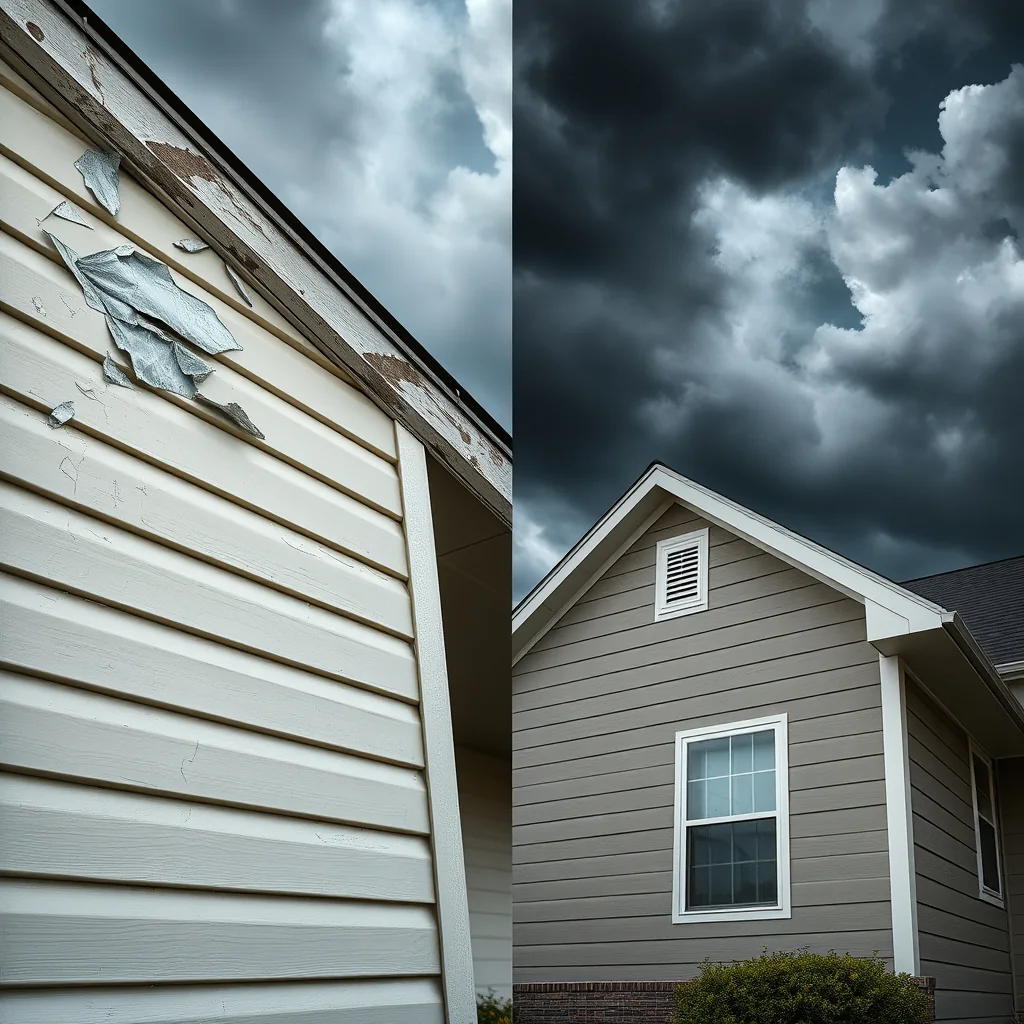
Central Texas sits in one of the most active hail corridors in the United States. Austin-area homeowners deal with significant hail events multiple times per decade, along with the straight-line winds that accompany severe spring and fall storms. When you’re choosing siding for an Austin home, storm resistance isn’t a nice-to-have feature, it’s a core requirement that directly affects how long your siding lasts and how often you’re filing insurance claims.
The two most common siding choices for Austin homes are vinyl and fiber cement (most often James Hardie). They behave very differently under hail and wind. This guide compares them head-to-head specifically on storm and hail resistance, the factor that matters most in Central Texas.
How Vinyl Siding Handles Hail and Wind
Vinyl siding is a thin, flexible PVC product. Its flexibility is sometimes marketed as an advantage, but in hail and high-wind conditions it’s a weakness:
- Hail cracking and brittleness. Vinyl becomes brittle in cold and can crack or shatter on hail impact, and even when it doesn’t crack on impact, repeated hail strikes leave dents, holes, and stress fractures. Larger hail (golf-ball size and up, which Central Texas sees regularly) routinely punches holes clean through vinyl.
- Wind uplift and blow-off. Vinyl siding attaches with a nailing hem and locking channel. In high winds, especially the 60-to-80+ mph gusts that accompany severe Central Texas storms, vinyl panels can unlock, lift, and blow off entirely, exposing the wall sheathing underneath to water intrusion.
- Fading and warping from heat. Separate from storms, Austin’s intense UV and heat cause vinyl to fade and warp over time, which makes it more brittle and more vulnerable to storm damage as it ages.
The practical result: in Austin’s climate, vinyl siding frequently sustains hail and wind damage that triggers insurance claims, and damaged vinyl often can’t be patched invisibly because the original color has faded and discontinued profiles can’t be matched.
How Fiber Cement (James Hardie) Handles Hail and Wind
Fiber cement is a dense composite of cement, sand, and cellulose fiber. It behaves nothing like vinyl under storm conditions:
- Superior hail resistance. Fiber cement’s density and hardness resist hail impact dramatically better than vinyl. While extreme hail can still mark or chip fiber cement, it does not crack, shatter, or puncture the way vinyl does under typical Central Texas hail. James Hardie products are specifically engineered and tested for impact resistance.
- High wind ratings. James Hardie siding, properly installed, is rated to withstand winds well beyond the gusts in typical severe Central Texas storms, it does not lift, unlock, or blow off the way vinyl can. The HardieZone system even specifies products engineered for high-wind and storm-prone regions.
- Heat and UV stability. Fiber cement holds its shape and structural integrity under Austin’s heat and UV, so it doesn’t become brittle and storm-vulnerable as it ages the way vinyl does.
- Fire resistance as a bonus. Fiber cement is non-combustible with a Class A fire rating, a meaningful advantage in Austin’s wildfire-aware Hill Country setting, on top of its storm performance.
Head-to-Head: Storm & Hail Comparison
Hail Impact
Fiber cement wins decisively. Vinyl cracks, dents, and punctures under Central Texas hail; fiber cement resists impact and rarely sustains the kind of damage that requires full replacement. For a hail-prone area like Austin, this is the single most important durability difference.
High Wind
Fiber cement wins. Vinyl can unlock and blow off in severe wind, exposing the wall to water intrusion. Properly installed fiber cement stays put through the winds typical of severe Central Texas storms.
Long-Term Storm Durability
Fiber cement wins. Because vinyl grows more brittle as Austin’s heat ages it, its storm vulnerability increases over time. Fiber cement maintains its storm resistance across its 30-to-50-year lifespan.
Insurance and Repair
Fiber cement is the lower-claim, lower-hassle option. Austin homeowners with vinyl siding file more frequent storm claims, and damaged vinyl is hard to repair invisibly. Fiber cement’s durability means fewer claims, and when repairs are needed they’re more straightforward.
Is Fiber Cement Worth the Higher Cost in a Hail-Prone Area?
Fiber cement costs more up front than vinyl, typically $13 to $16 per square foot installed versus $4 to $9 for vinyl. For an Austin homeowner, the storm-resistance math usually favors fiber cement over the life of the home:
- Fewer hail and wind claims means fewer deductibles paid and less risk of premium increases or policy non-renewal
- No recurring replacement of storm-damaged panels
- Longer lifespan spreads the higher up-front cost across 30 to 50 years instead of vinyl’s shorter, storm-shortened life
- Stronger resale value and curb appeal in a market where buyers increasingly recognize Hardie
For the full cost picture, see our James Hardie siding cost guide. For the broader material comparison beyond just storms, see James Hardie vs vinyl siding for Austin homes, and for how fiber cement holds up over decades in our climate, how long James Hardie siding lasts in Texas heat.
The Verdict for Austin Homeowners
For storm and hail resistance specifically, the factor that matters most in Central Texas, fiber cement is the clear winner over vinyl. Vinyl’s lower up-front cost is real, but in a hail corridor like Austin it comes with higher long-term storm risk, more frequent claims, and a shorter usable life. Fiber cement’s impact resistance, wind performance, and durability make it the material most Austin homeowners should choose if storm protection is a priority.
If you’ve already had storm-damaged siding, watch for the warning signs that it’s time to replace rather than patch, our guide on signs you need to replace your siding in Austin TX walks through what to look for.
Why Tex Land Construction
Tex Land Construction is an Elite James Hardie Preferred Contractor serving Austin and the surrounding communities, fully licensed, insured, BBB accredited, with a 5.0 Google rating. We help Austin homeowners choose and install storm-resistant fiber cement siding correctly, with proper flashing, weather barrier, and high-wind installation detailing, backed by a written labor warranty.
We offer a 5% discount on all services for military veterans, first responders, and senior homeowners. To discuss storm-resistant siding for your Austin home, visit our siding page or call 512-808-6882.
Protect Your Home With Storm-Resistant Siding
James Hardie fiber cement built for Central Texas hail and wind. Elite Preferred Contractor. 5.0 Google rating.
Schedule Free Estimate →Let’s talk about your home.
Schedule a free consultation →